
Exclusive:'I couldn't have brought first show to Edinburgh Fringe now', warns Baby Reindeer and Fleabag producer

Baby Reindeer and Fleabag producer Francesca Moody first brought a show to the Edinburgh Festival Fringe in 2011.
When star Edinburgh Festival Fringe producer Francesca Moody brought her first theatre show, The Ducks, to Edinburgh in 2011, the full cost of the run was £10,000.
“You just can't do that now, because that's what the accommodation is going to cost you on its own,” says the Baby Reindeer and Fleabag producer. “I certainly would have struggled to take work for the first time up there now.


“I say that in the knowledge that there are lots of barriers to access that don't exist to me. I grew up in a very comfortable, middle-class upbringing - but I certainly think it would have been far tougher.”
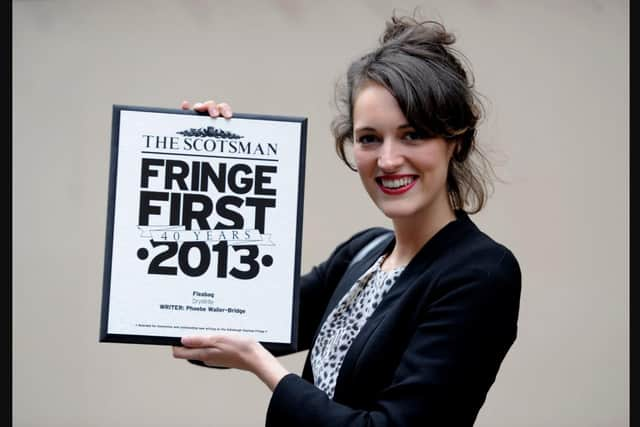
Now revered in the industry for her two hit shows, both of which have gone on to become major TV productions - as well as last year’s critically-acclaimed production Weather Girl - Ms Moody is on a quest to return the Fringe to the hotbed of new work and raw talent it once was.

Through her company, Francesca Moody Productions, she is launching a new venue Shedinburgh in Edinburgh College of Art’s Wee Red Bar. Venue organisers have promised to “flip the traditional Fringe model” by paying artists to perform and has called on funding from the Scottish and UK governments, as well as philanthropists and corporate sponsors, to help support performers.
The soaring cost of appearing in the Fringe has been cited as one of the major barriers for artists performing in Edinburgh, with some, especially those outside of Scotland, forced to abandon plans of performing entirely, or stay as far away from the capital as Glasgow or even Newcastle.
Originally conceived as a digital operation during the pandemic, the revival of Shedinburgh is already one of the most talked-about topics of this year’s Fringe, not only because of its founder’s iconic status, but as a potential blueprint for other venues.
Artists will perform for one night only and while they will be paid, they will also be funded for their accommodation and travel expenses. The initial line-up includes comedians Jayde Adams and Mark Watson, as well as a range of up-and-coming artists. However, further shows are still to be announced, with special “secret sets” to be revealed during the festival. For audiences, “pay what you can” tickets will be available for every show.
Ms Moody says: “As a company and an individual which had so much success at the Fringe and was able to make it work there at a time where it felt a little bit more like a level playing field, I think we just feel really passionately that we wanted to try and find new ways of reimagining that Fringe model.
“At the same time, we want to have a chance to platform some really exciting and interesting emerging artists alongside some well-known, prolific makers who maybe haven't been to the Fringe more recently.
“We want to make a real commitment to thinking about how we can make sure that the Fringe that we know and love and that has been so significant to our success can be that for other artists and producers and theatre makers and comedians and musicians as well. It's increasingly challenging to be able to do that.”
Fringe Society data released last year suggested that a 150-capacity play from a Scottish-based company with 12 performers would cost an average of around £25,000, with an international dance or physical theatre show in a 60-capacity venue coming in at around £19,000.
Accommodation, meanwhile, now averages out at well over £100 a night for a single room.
Ms Moody says: “Accommodation in particular, has become just inaccessibly expensive, and it means that the majority of the work that gets to the Fringe, is either work that's already backed by somebody with money, which requires you to have, you know, established yourself a little bit in the industry and made some meaningful relationships as an artist, or just super commercial work.
“There's definitely a place for that in the eco-system. But when you think about the really amazing artists and shows that have come out of the Fringe over the last 75 years - the brilliant, game-changing, cultural moments and pieces of work from artists who were doing it unencumbered by other people and voices and who were giving themselves permission to just be a bit scrappy and and try something out and not be afraid to fail.
“Then obviously that becomes harder when things get more expensive, because there's more pressure on success as well. I certainly think there are people who are being priced out of the Fringe at the moment.”
She points to other initiatives from other venues and the Fringe Society, to find new routes to accessibility for artists.
“What we're doing, we're not doing in isolation,” she says. “We're not reinventing the wheel here. There's the Free Fringe, which has been doing it for a really long time. But I think it's the responsibility of all of those stakeholders and folks like me who've had some success to try and level the playing field in some way again. If we don't keep reimagining it, then the problem is only going to get bigger.”
Ms Moody admits that Shedinburgh, which she describes as a “subsidised project”, is unlikely to break even this year, but insists lessons can be learned from the process - not least utilising other available funding.
She says she hopes the structure would spark a conversation around how guarantees are paid to artists, rather than artists paying guarantees to venues.
“Work at this scale is really where all the really great things start,” she says. “My hope is that the legacy, amongst other things, is that some of the shows that are new are built into other things, and that this is the start of that for those artists who are performing in Shedinburgh.”
However, she admits changing the existing Fringe model more widely would require “some serious remodelling” and called for funding from various sources to support artists.
“Other venues should be able to replicate it,” she says. “But all venues have a bottom line they have to hit. So, whether they'll be able to replicate it to the level that we've managed to structure it at this time, I don't know, but what I do think it's showing is that there's a need for more investment in philanthropy at this level of making work.”
She adds: “There's less public funding than ever for the arts. There are ways of procuring public funding to make your work at the Fringe, but they are super limited. So I think it's about saying ‘is there more investment that could be made to help us to reimagine the ways that we make the festival possible?’ And then is there more that can be done from a philanthropic perspective and from partnerships at a sponsorship level in order to support work at this scale?
“We need funding from from the Scottish Government, from central government, the arts councils, grants and foundations, philanthropy from individuals. We don't have a great culture of philanthropy in the UK in the way that they do in the States. Corporate sponsorship is one very valuable way of achieving investment in the arts, and I certainly think that there could be more of that. It's an eco-system, money needs to come from multiple sources.
“But at the end of the day, the arts make people's lives better. We all sit in front of our televisions at the weekend and watch TV shows that started their lives as as shows at the Fringe, or that are written by people who first started making work at the Fringe. So if we want all of that stuff to survive, we have to support at this level.”
Comments
Want to join the conversation? Please or to comment on this article.