
Figures in Extinction: the EIF dance show tackling climate change
Simon McBurney and Crystal Pite conclude their stunning triptych with Nederlands Dans Theatre with panache and pathos, writes Kelly Apter
Exiting a theatre after a contemporary dance performance, it’s not uncommon to overhear versions of the following: “Well I loved it, but I’ve got no idea what it was about.” Watching Figures in Extinction is a slightly different proposition. Firstly, there is nothing ambiguous about the subject matter underpinning this stunning triptych. It’s a beautiful, sensitive, emotional and deeply troubling look at the impact of climate change, and how human beings relate to each other and the world around us.
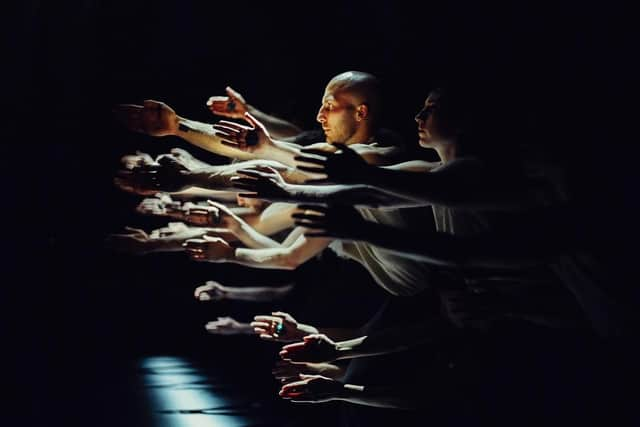

Secondly, the show’s creators share their thoughts throughout, using recorded conversations to convey the creative process. Which would be fascinating in any circumstance, but when those creators are Complicité founder Simon McBurney and choreographer Crystal Pite you definitely want to sit up and listen. Over the past four years, the duo have been working with the talented dancers of Nederlands Dans Theater (NDT) to create three new works. Figures in Extinction [1.0] premiered in 2022, part two in 2024, and the final instalment earlier this year, with all three being delivered in one performance at this year’s EIF.
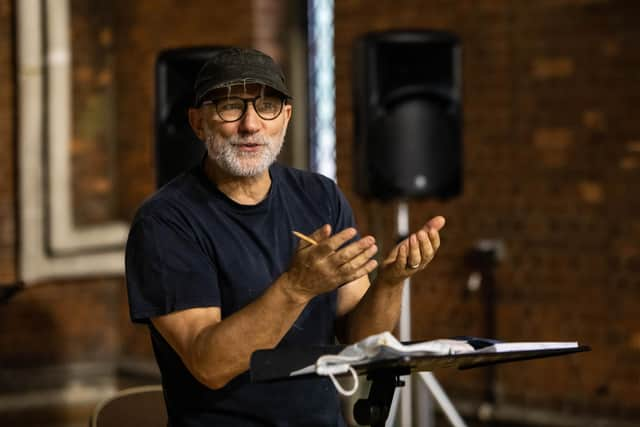
While the voiceover captures the musings of McBurney and Pite, they are in no way telling us what to think or how to act as a consequence of seeing the show. “It’s fragmentary recordings of our own lives, and we also recorded everything we said to each other in the rehearsal studio,” explains McBurney. “Because we wanted to make it clear to people that Crystal and I were making these pieces step by step, moment by moment, and that neither of us had any fixed ideas about what conclusions people should draw.”
At the start of their journey, McBurney and Pite had a rough sketch in place, but everything was up for debate. “What happened between Crystal and I was a dialogue,” explains McBurney. “We knew it would be in three parts, and decided that for the first one I would provoke Crystal and she would choose the structure. Then for the second one Crystal would provoke me, and then we would work on the third one together. But of course, like all propositions, it developed, shifted and altered. And the incredible thing about Crystal, and what’s beautiful about her name, is that she crystallises ideas within movement with an astonishing clarity and precision. It was an enormous privilege to work with her.”
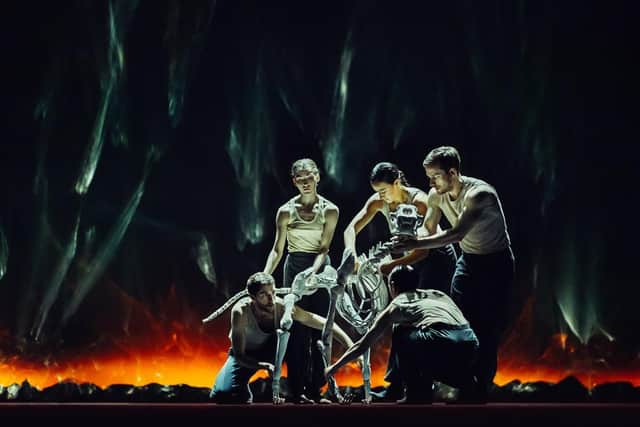
One of the provocations McBurney sent Pite was eventually shaped into a list of animals, plants and bodies of water that no longer exist. During Figures in Extinction [1.0], the names of these former lifeforms are projected onto a screen, along with a number. As the numbers grow, so does our understanding of the scale of the problem. Meanwhile, dancers embody the animal experience, moving as one in a flock or herd, and depicting a small frog caught under the burning sun. Yet remarkably, it never strays into mimicry.
“I think Crystal was very aware of that when we were making it,” says NDT dancer Nicole Ward. “And just as she can really evoke human emotions with small gestures, it was about trying to find that same thing through an animal. So not trying to perfectly shape the animal or move like a bird in an obvious way, but instead finding the human inside the animal to help the audience connect with it more. The movement of the frog under the light looks a bit amphibian but it’s more about heat and exhaustion. So it was about trying to find a link – what would that heat do to a human? And what does it also do to an animal?”
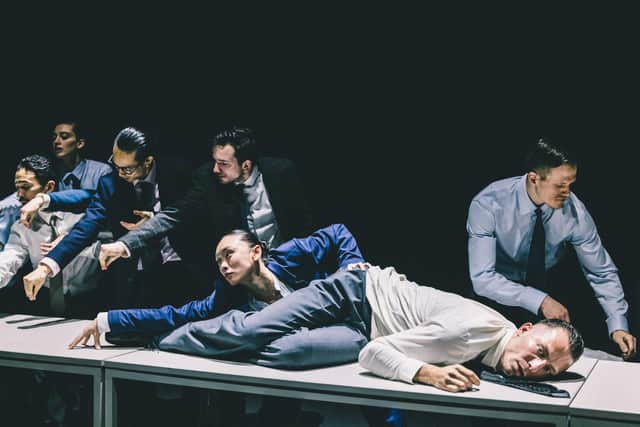
Figures in Extinction [2.0], on the other hand, is all about us. Dressed in identical suits, the dancers depict the worst form of humanity. Disconnected, disinterested, self-serving, with the natural world of part one long forgotten. “The first piece is about our separation from what people call nature,” says McBurney. “But I feel that term leaves us a bit removed, as if it’s something outside of us, when we’re all part of nature. In the second piece, it’s almost a separation from ourselves, from one person to another.”
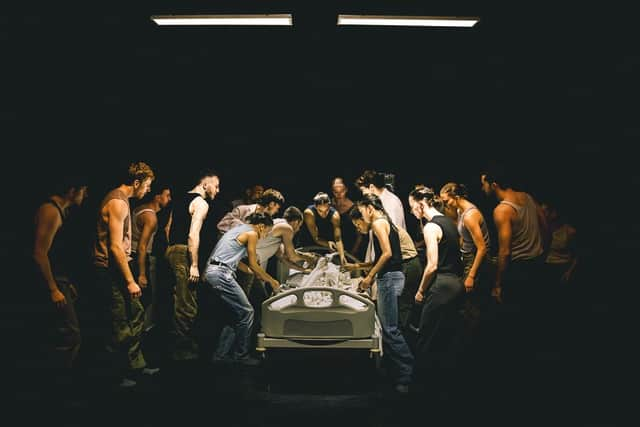
By the time we get to Figures in Extinction [3.0], there’s an acknowledgment that one thing unifies every living creature on this planet: death. So here we find a series of tableaux taking place around a hospital bed. The personnel may change, the language and culture vary, but the outcome is always the same.
“The image of the bed became very important to us,” says McBurney, “because my mother died in bed, as did my father. I’ve had the privilege to participate in quite a few deaths, and so the bed itself is an extraordinary place. And we examined the prone, horizontal body and what that’s like for dancers who are largely vertical and sometimes even airborne.”
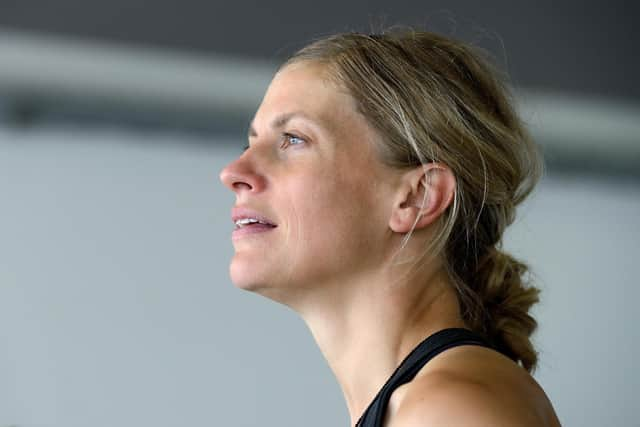
To demonstrate that we are all citizens of the world, the dancers share information about their ancestry, building a rich tapestry on stage of the names and birthplaces of their grandparents. For Ward and the other dancers, it was an unusual but illuminating experience. “I’ve never been in a process where you’re asked to share those parts of your background,” she says. “And it was quite exposing, but also really beautiful to realise that you didn’t know this about your colleagues. It was kind of scary to really open up but it also felt like a gift.”
Working with one of the world’s finest dance companies was also received as a gift by McBurney, who looked on in awe and admiration at the self-sacrifice of these young people. “I felt incredibly humbled,” he says. “These dancers have denied themselves a careless youth in order to achieve what they’re able to do. They have to take such care of their bodies, it really is the most extraordinary monk-like dedication to their art. And they’re all imaginative artists, so they don’t just blindly follow a piece of choreography. You can give them an idea, ask them to work on it, and they’ll produce something. So it was all an exchange.”
Figures in Extinction, Festival Theatre, 22-24 August
Comments
Want to join the conversation? Please or to comment on this article.