
Exclusive:Outgoing Fringe chief reveals 'breakthrough' over Scottish Government funding after 9-year battle
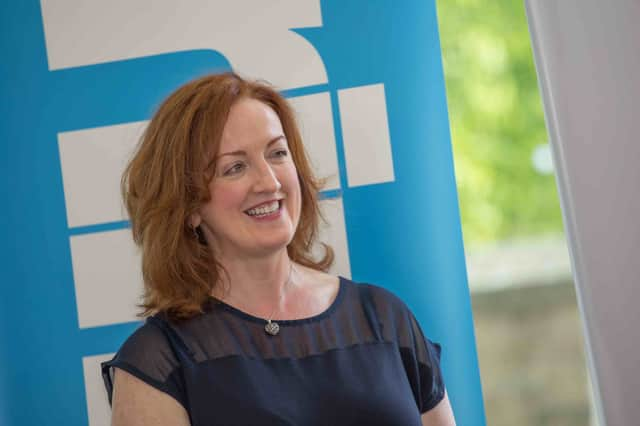
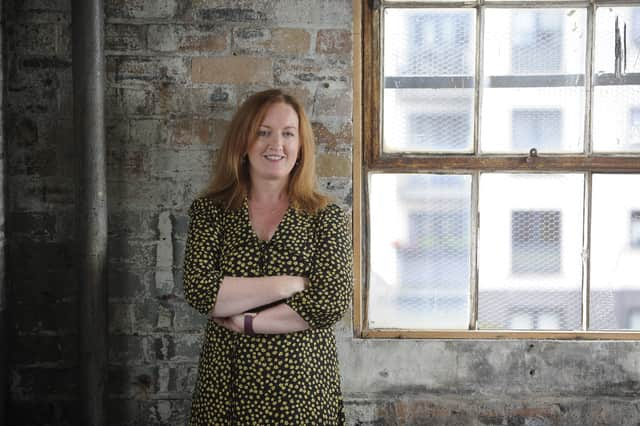
Outgoing Fringe Society chief Shona McCarthy has spoken on winning a nine-year-long battle

The organisation overseeing the Edinburgh Festival Fringe is set to secure Scottish Government funding for the first time in seven years amid fresh warnings over the event's future.

Hundreds of thousands of pounds are expected to be committed to the Fringe Society this year despite calls for the arts charity to be scaled down and financial help diverted towards venues.
The Fringe Alliance, which represents leading producers and programmers, has claimed the festival's long-standing "open access" model is no longer sustainable due to rising costs, and accused the Fringe Society of competing for funding with artists and venues.
A dossier by the group for the Scottish Government seen by The Scotsman highlights the Fringe Society's "growth and misalignment", and claims its rising costs and funding priorities have "distorted the festival's financial eco-system away from the core creative contributors".
However, outgoing Fringe Society chief executive Shona McCarthy said a vital breakthrough had been made after a lengthy “battle” to ensuring the event no longer "falls through the cracks" in terms of public funding for the arts.

The Fringe Society, which dates back to 1958, is now expected to receive a significant share of an additional £4 million ring-fenced for festivals in the new Scottish Budget.
In a new open letter calling for a "joined-up investment strategy" for the festival from the Scottish and UK governments, and Edinburgh City Council, Ms McCarthy said there was a need to support "both the Fringe and the Fringe Society".
The chief executive, who has been lobbying for £1.5m in new public investment in the festival over the past year, previously described the level of funding support for the event as a "national embarrassment" and suggested it was becoming "almost impossible” to deliver.
Last year she claimed the Fringe had been singled out for poor treatment over its pleas for funding while being championed as a "jewel in the crown for Scotland".
A Scottish Government blueprint for culture highlighted the level of international participation in the Fringe and its global influence in inspiring more than 200 other events. The Fringe Society secured its first ever backing from the UK government in 2023 when it was allocated £7m for new headquarters building.
Last year it won approval to re-allocate £1m of that grant to ensure a "Keep It Fringe Fund" for up-and-coming artists and companies could expand in 2024 and 2025.
Ms McCarthy said funding from the Scottish Government was needed to provide the event's "core services", including box office, marketing, promotion and support for artists.
Core funding was previously provided by the Scottish Arts Council and then Creative Scotland until 2018, when the Fringe Society lost all long-term support.
Fringe shows created by Scottish artists and companies are supported by the Scottish Government through a dedicated £550,000 Made in Scotland Fund worth £550,000 a year. However, the Fringe Society's latest annual review revealed it had made a loss of almost £250,000 in the previous 12 months.
In an interview with The Scotsman, Ms McCarthy said: “We’ve been through a really positive process and have made a breakthrough on securing annual core investment again. We’ve had a clear commitment that there will be provision in the Scottish Government's new budget.
"It has been a nine-year battle to get us back on the radar in order for the Fringe Society to do its job as effectively as it can, keep costs as low as possible for the services it provides and use our convening role to unlock support for the wider festival ecology.
“In order to do that, we have to be stable and solvent as an organisation. I think that has absolutely been resolved now. The oxygen mask for us is proper, annual core investment.
“There is now undoubted recognition from the highest levels of government that the Fringe Society has been left behind and has been falling between the cracks. I am leaving feeling much more confident for the stability of the Fringe Society.
"It will leave the Fringe Society stronger for a proper pitch for the wider Fringe ecology over things like theatre tax relief, which would make a massive difference if it was extended to include pop-up venues at the festival, and a share of the new visitor levy in Edinburgh.”
The Fringe Society's new backing from the Scottish Government has emerged despite calls from the Fringe Alliance for the charity to be "reformed and restructured", to ensure it operates with a reduced budget and has less influence in future.
The group, which includes the "Fringe Big Four" Assembly, Gilded Balloon, Pleasance and Underbelly, is demanding a "fairer funding allocation" to ensure there is "direct financial support to artists and venue producers for infrastructure, creative development and operational costs".
Its dossier states: "The Fringe is at a critical juncture due to rising costs and financial pressures on artists and venue producers. The festival’s open-access model, which relies on these groups sharing financial risks, has become unsustainable.
"The festival is at risk of collapse if financial imbalances and rising costs are not addressed. Reforming the Fringe Society’s role, redistributing funding and making participation more financially sustainable are essential for the Fringe’s long-term survival.”
In her new open letter, Ms McCarthy said the Fringe Society's services helped to "remove barriers" to audiences and participants in the festival, and ensure the event is as inclusive as possible.
She said: "The Fringe is unlike any other cultural event in the world. It is largely self-financed by those who take the risk to make and show work. It is made up of hundreds of parts, all of which are important.
“It is a wonderful balance of ticketed venues, street performance, free shows and pay-what-you-want shows, from new discoveries to world-class and established artists.
"The stability of the Fringe is dependent on a recognition by everyone involved in it. It is not owned by anyone – no organisation, group, or collective. It has no super-league or participant base that is any more important than any other. It is a platform for freedom of expression like no other – ever-evolving, growing, contracting and contorting.
"It is not stuck in any one period of time and should never allow any single interest group or sense of entitlement to derail its beautiful, messy and joyful mission for inclusion and cultural democracy.”
A Scottish Government spokesperson said: “The Fringe is one of Scotland’s signature events. Discussions on support for the Fringe Society are ongoing, to determine how it can best work with other partners to grow the significant benefits it already provides to Scotland’s economy, our society and cultural sector.”
Comments
Want to join the conversation? Please or to comment on this article.