
Fringe chief admits emerging talent is being 'squeezed out' as final 2024 attendance revealed

A total of 2.61 million tickets were sold for this year’s Fringe

The figurehead of the Edinburgh Festival Fringe has admitted emerging artists are being “squeezed out” of the event by financial pressures she warned it was being put in "peril" by complacency over its success.
Fringe Society chief executive Shona McCarthy said the pipeline of future talent for the festival was “under threat” as she admitted that artistic risk and ambition were already being “hamstrung” by a lack of support for the event and its participants.
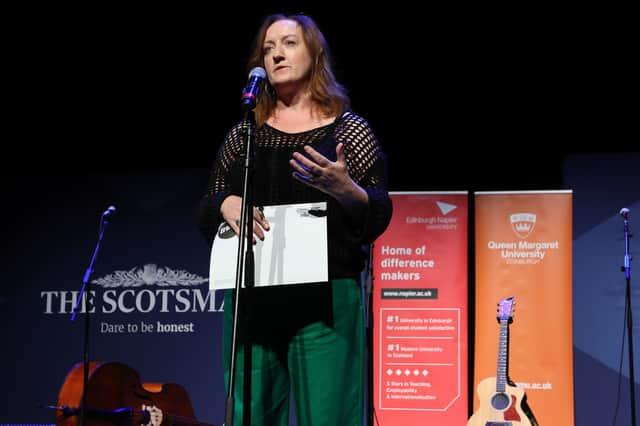
Writing in an open letter published on the last day of the festival, she suggested artists appearing at the Fringe were being “taken for granted” as she threw her weight behind the staging of protests across a number of stages over the weekend.
As it was announced that this year's Fringe had sold 2.61 million tickets - the fourth highest attendance in history - Ms McCarthy said its "outward veneer of success" could not mask the struggles of new artists, the "fragility" of the performing arts community and the impact of “continuous” public sector cuts.
She warned there was a danger of "decimated” arts funding and broken promises of new investment leading to "job losses, exclusion and boring art that is only the privilege of those who can afford to be part of it, as performers or as audiences."
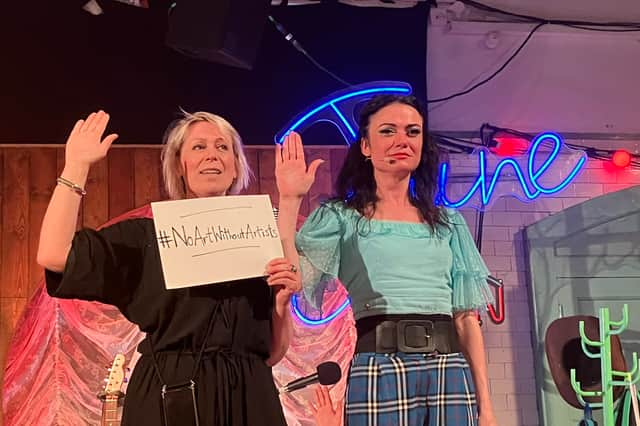
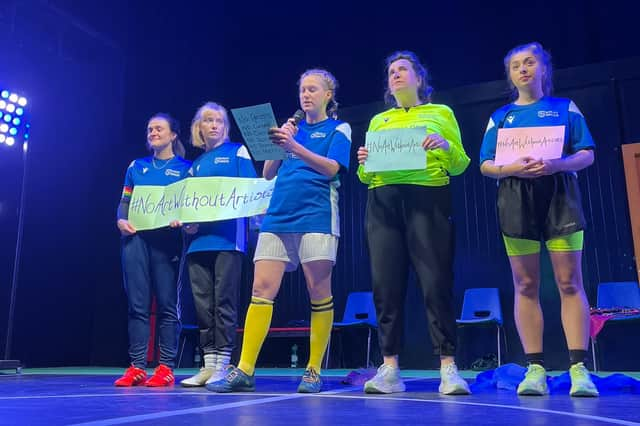
The final weekend of the Fringe saw Scottish actors and theatre makers stage protests at the end of shows over the indefinite closure of a multi-million pound fund for artists at the end of this week due to new cuts imposed by the Scottish Government on its arts agency, Creative Scotland.
Audiences were told about the “devastating” closure of the open fund for artists – which was described as the incubator for Scottish work at the Fringe – and the “crushing impact” it would have on freelances.
They were also urged to share video footage and photographs of the protests with the NoArtsWithoutArtists hashtag.
This year’s Fringe saw 3746 registered for the official programme, the second biggest line-up to date, after 2019’s record-breaking edition. The overall attendance of 2.6 million was the highest since then and was up around seven per cent on last year's official tally
The 2014 edition of the festival, which featured 3193 shows, attracted an overall attendance of 2.1m.
As the final shows were staged across the city, Ms McCarthy said the “fragility” of artists had been “palpable” at this year’s festival.
She said: “While Fringe 2024 has been brilliant, and it is to be celebrated that artists, companies, venues, producers and promoters took huge financial risks and pieced it together and put on the shows, the dominant message as we close is that there is no Fringe without art. There is no art without artists.
"The cumulative effect of the relentless rise in the cost of everything, and an unhelpful policy environment facing the arts sector has resulted in widespread concern that is keenly felt by artists.
"From the availability of affordable accommodation, blunt policy changes which have consequences for major events, to continuous public sector cuts, we need to ensure that the hard won and fragile success isn’t met with complacency by those who can influence change.
"It is not enough to have old stories of how important Edinburgh’s festivals were in providing healing and connection after the Second World War.
"They are important now, contributing hugely to health, wellbeing, joy and job creation.”
Ministers have been promising for the last 10 months that they would "more than double" arts spending in Scotland and have committed to put £100m of new investment into the industry by 2028.
However Creative Scotland recently had £10.65m of government funding allocated in its budget either cancelled or put on hold due to a new squeeze on public spending.
It announced last Monday that the closure of its fund for artists on 30 August was "unavoidable" due to a lack of confirmed finance. It had already warned the Scottish Parliament that Scottish culture was facing the prospect of years of "managed decline" because of uncertainty over its future budgets.
Protests against the new government cuts were staged at Edinburgh International Festival and Fringe shows at Traverse Theatre, the Royal Lyceum, the Church Hill Theatre, Assembly and Summerhall over the weekend.
Statements were read out at the Fringe shows So Young, Love Beyond, Same Team, The Show for Young Men, June Carter Cash: The Woman, Her Music and Me, and V.L.
Ms McCarthy added: “Here at the Fringe and across the UK, the pipeline of creative potential is under threat.
“Artistic risk and ambition is hamstrung by an operating context that squeezes out emerging artists that have made the Fringe globally renowned, unique and joyful.
“There is no future for the Fringe without art. There is no art without artists. Artists and the venues who host them are at the heart of this event, and there would be no Fringe without them.
"They take the risk of bringing work to the festival every year, and while the arts landscape is at a crossroads, we need to ensure that the Fringe, one of the greatest celebrations of arts and culture in the world, is protected for the future.
"As we celebrate the hundreds of thousands of people who have been moved, delighted, awed, shocked and entertained by the stories artists present across Fringe stages, it feels that now, more than ever, we must not take artists for granted; we would do so at our peril.”
Dani Rae, managing director of Assembly, one of the Fringe’s biggest venue operators, said: “We’re extremely proud of our artists and staff, including those freelancers backstage and in front.
"We are shaken by the Scottish funding announcements in recent days, the impact of which affects our entire sector.
"We call on the Scottish and UK Governments to remember, there is no art without artists, and there are no Edinburgh festivals without artists.”
Gareth Nicholls, artistic director at the Traverse Theatre, which champions new writing, said: “Creative Scotland’s open fund helps build careers and craft to get an idea off the ground, and helps places like the Traverse keep our theatres alive with bold new ideas.”
Comments
Want to join the conversation? Please or to comment on this article.