
Closure of Scottish National Galleries 'remains on the table' as maintenance backlog costs soar to £20m
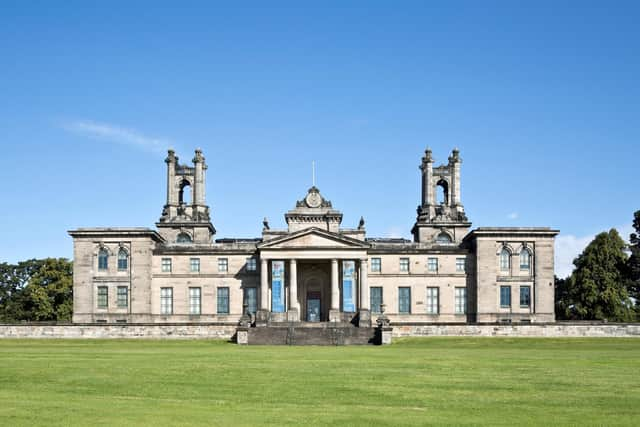
The National Galleries’ Modern Two was closed for a period in 2022.

Scotland’s galleries could close or have wings shuttered off because maintenance costs have rocketed to more than £20 million, the head of the organisation in charge of the buildings has warned.
Anne Lyden, director general of the National Galleries of Scotland (NGS), told Holyrood’s culture committee on Thursday the costs of maintaining the buildings had increased significantly since a previous estimate in January.
She Lyden warned increased employer National Insurance contributions and Fair Work requirements meant more galleries may need to be closed in future due to a lack of funds.
Also giving evidence to the committee, Alistair Mackie, chief executive of the Royal Scottish National Orchestra (RSNO), warned classical music could become a “middle class business” if more was not done to support the sector.
Ms Lyden told MSPs: “I’m happy to say that we haven’t had to close any of our operations, we were successful in managing a balanced budget for this year. But we do have very valid concerns for ongoing years in terms of what we will be able to do.
“This is something that remains on the table and we have been honest and transparent with our colleagues as to the difficult financial situation we are in and encouraging everyone to be mindful of their budget management and accounting for that.”
Ms Lyden told MSPs that employer National Insurance increases and the Fair Work requirements had created £1.75m in additional costs. She said all of the organisation’s activities were funded through self generated income, sponsorship and fundraising.
She said: “With the budget we were allocated for this financial year, there was an increase of 9 per cent, which totalled 1.75m - so it’s gone.”

She said the organisation, which is responsible for more than 130,000 works of art, was trying to “move more into a commercial mindset and [create] opportunities to raise funds”.
“We know there will be a shortfall and are anticipating that,” she said. “The last thing we would want to do is have any closures, but I honestly can’t rule that out, particularly without knowing the budget for next year.”
She said major renovation work was needed, particularly on the main building on the Mound in Edinburgh.
“It's effectively our ageing estate,” she said. “Like many cultural bodies, in particular, the national collections, we are working in these amazing buildings, many that date from the 19th century, but they are not necessarily fit for the climate crisis in which we find ourselves.
“They're also using ageing systems, whether that's from gas boiler heating to needing electrical rewiring and repair. There’s a long list. We need about £4m a year in terms of tackling that backlog and last year we received £1.9m, so that accounts for the increase in the backlog.
“Our main gallery, the National Gallery on the Mound, is in need of support in terms of its fabric and infrastructure. There’s a real concern for addressing leakages, the plant system is not fit for purpose and thinking about future proofing the organisation, this is something that is quite critical.”
Ms Lyden said the galleries were “shovel ready” to start building their Art Works facility in Granton in Edinburgh’s north - and called for capital funding resources from the Scottish Government.
“We just need the funds to be able to literally break ground and get going,” she said. “We’re very much thinking about this as future proofing, not just for our organisation, but for the collection that it will contain for the people of Scotland.”
She added: “We want to be able to open that up to our audiences. [Also], to address the challenges at the Mound level gallery, we need to be able to safely store our collection.”
Meanwhile, Mr Mackie said costs for Scottish orchestras were higher than for those operating in London, due to higher travel costs when touring. He also cited “phenomenal” financial support from the City of London for orchestras there - compared to the RSNO’s loss of the majority of local authority funding.
“Artistically, I think we’re flying, but its not sustainable on the salaries that we pay,” he said, adding that the RSNO should be benchmarked against the London Symphony Orchestra, rather than regional orchestras.
“I would argue we’ve been as entrepreneurial as we can be, we’ve done everything we can, we’ve squeezed every budget line, but the only way we can be fiscally responsible is to pay salaries that are far too low.”
He added: ““You won’t bring the best to Scotland and keep the best in Scotland unless you are offering salaries, not freelance work. Talent is inevitably going to drift. Long term, you’ve got to pay a mortgage. We want a diverse cultural sector. You don’t accumulate all that debt from education to earn poor salaries or to go into an incredibly insecure freelance profession. It will become a middle class business, there is no other way to say it.”
He said he wanted the RSNO to become “internationally competitive”.
“Without more support from the Scottish Government, I don’t think we can do that,” he said.
He called for government “match funding” for endowment funds, which he said was a model used successfully in the US.
He said he would like to set an initial target of £10m for the RSNO over three to five years, generating half a million to a million a year for the organisation.
“If you want diversity in culture, you need to have jobs, not freelance,” he said.
Comments
Want to join the conversation? Please or to comment on this article.