
The Ending Writes Itself by Evelyn Clarke: Engaging and wickedly fun

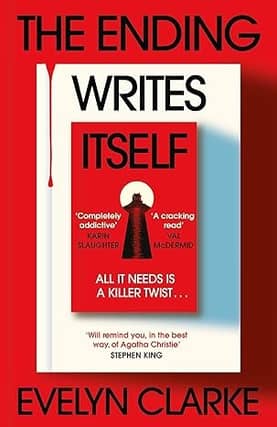

A new mystery thriller has hit the bookshelves.
After the death of globally adored author Arthur Fletch, a group of writers, firmly on the midlist, find themselves on a desolate Scottish island where they are asked to finish the final chapter of Fletch’s latest novel, which had been left unfinished.
The Ending Writes Itself, published under the name Evelyn Clarke, is the creation of V.E Schwab and Cat Clarke; one established author and one former established author, now a screenwriter. Old friends who plotted this novel while catching up in Edinburgh.
They are not the first to explore the playful idea of crime writers discussing crime writing in a crime novel while crimes are happening, though this book takes a much more brutal hit at the publishing industry than its predecessors.
It follows in the illustrious footsteps of, among others, Original Sin by PD James, Magpie Murders by Anthony Horowitz and to an extent, Murder Must Advertise by Dorothy L Sayers. Even Agatha Christie had her indulgent Mrs Oliver, a harried and frustrated crime author, snipping away about editors and publishers.
It appears the brutal bloodshed of murder matches the bloodthirsty and cutthroat publishing industry to a tee.
Despite its comparisons to the Queen of Crime herself, if I were compelled to compare it to another classic of the genre, I would say it veers more towards PD James than Christie. Not in style, with James’ gentle and archaic literary prose replaced with something spikier and fast paced, but in essence. We spend the book jumping between narrators, not just seeing the world through their eyes, but really feeling it. Rooting around in their consciousness and memories, learning their darkest thoughts and feelings. The humanity of the players are central, rather than secondary, to death and destruction.
With Christie, we watch the story play out, taking note of clues and dodging red herrings, but here we are in the story, sometimes knowing things that the characters themselves aren’t aware of as they flail around in the dark.
In the advertising of this book, there are the inevitable mentions of the greatest selling crime novel ever, And Then There Were None.
But these similarities are more like small, tasty treats in a much larger buffet than a direct replica. Yes, they are isolated on an island, Scotland rather than Devon, and yes, people die, but it doesn’t have that haunted and inevitable feel of Christie as her characters regularly and systematically are murdered. Meticulous and relentless, And Then There Were None reads more like a horror novel than crime fiction.
The Ending Writes Itself is light and playful. The deaths feel chaotic and unplanned, and certainly not regular. If you like your first body in the first few chapters, you will be disappointed.
The whodunnit element is not a shock twist, or a marvellous surprise. To be clear, it doesn’t feel like it’s supposed to be. You won’t groan with frustration that you should have guessed, but this doesn’t make it less satisfying, and really, all a good mystery should be is satisfying. You shouldn’t feel cheated by the author who has pulled a last minute rabbit out the hat to make everything fit and with this book, you won’t.
The real joy of this book however, is the insight into the industry that the authors bring. It is a series of bloodied and unrestrained punches right in the stomach of publishing, bluntly addressing issues of racism, misogyny and class which plagues it. This is perhaps not a good book for an aspiring author to read, but it is engaging and wickedly fun.
Comments
Want to join the conversation? Please or to comment on this article.