
Stuart Kelly on the year in books: 'It’s always telling which books I keep to re-read'
Stuart Kelly runs through his favourite books of the year, and reflects on the outcomes of this year’s major literary awards
André Malraux once said, supposedly, that in literature, as in love, we are often surprised by the choices of others. That comes back to me annually whenever I look at the Christmas recommendations, and the significant events of the past year.
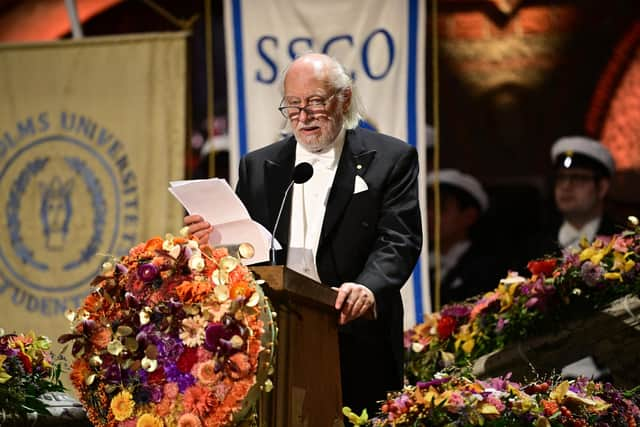

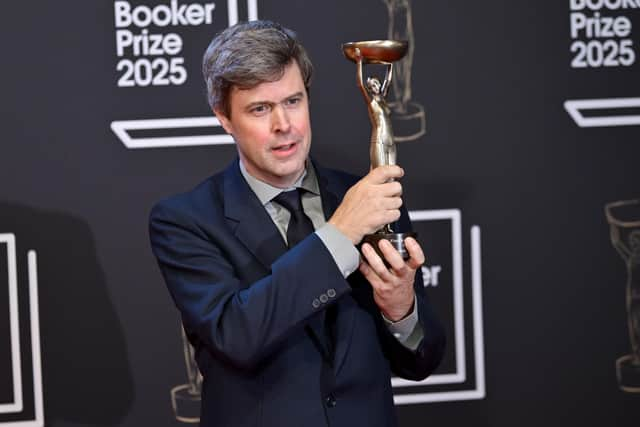
Indeed, I am thrawn enough to be suspicious of anything that everyone likes. So I was overjoyed that László Krasznahorkai won the Nobel Prize, since I adore his work – he is serious, difficult, uncompromising and, even better, the right people can’t stand him. By serendipity, a Hungarian – or Anglo-Hungarian – novelist won the Booker as well: David Szalay. He was one of the writers we selected when I was on the judging panel for the Granta Best of Young British Novelists in 2013, and I suspect Flesh will be more admired than loved. It certainly chimes with the low-level hysteria about “the crisis in masculinity”, although my eyebrow twitches when inarticulacy is proposed as a defining characteristic of homo hodiernus.
The Saltire no longer awards an overall winner, and my abiding memory of this year is the number of category winners (Kate Atkinson, Sarah Moss, Sean Lusk, Tim Craven, Anthony Vahni Capildeo) who felt the need to apologise for their Englishness or justify their Scottishness. More significantly, the fact that not all the judges read all the submissions seems to mean the posh bingo is played with weighted balls: a single judge can stymie a book progressing to the longlist stage. Certainly, there were a number of Scottish books whose exclusion I found unfathomable. But, cf. opening sentence.
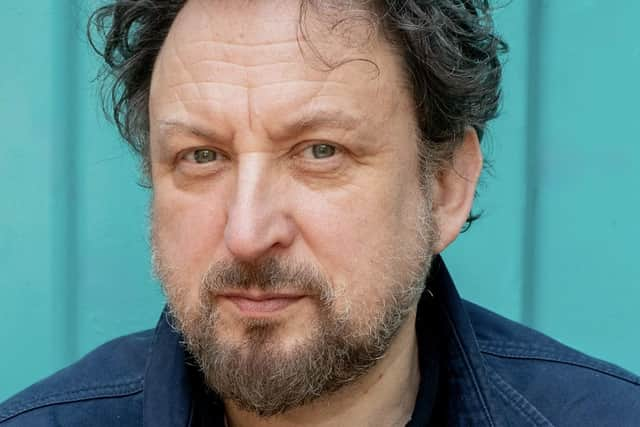
Chief among them would be former winner Ewan Morrison For Emma: I agree with my colleague Allan Massie that Morrison is “the most interesting Scottish novelist of his generation – in fact, why stick at Scottish?” On the surface the book is about transhumanism, AI, techno-capitalism and suchlike; in its depths it is about grief, emotional failure and the struggle to stay human. All this was prescient enough, but he could hardly have foreseen how assassination edged back into mainstream politics. It is an achingly, stunningly grown-up novel.
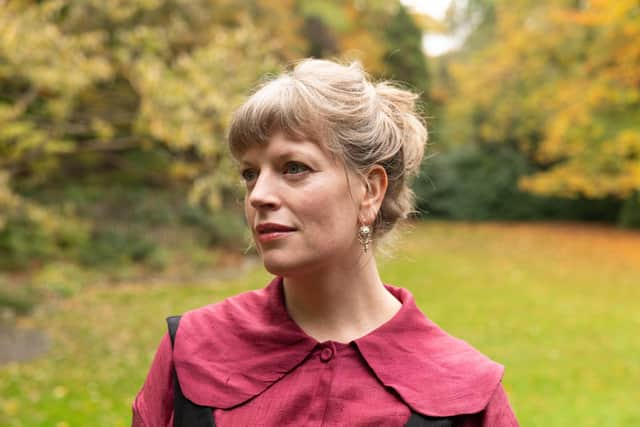
It’s always telling which books I keep to re-read: this year I have bought additional copies of Sarah Perry’s Death of an Ordinary Man, Sarah Hall’s Helm, Niamh Ní Mhaoileoin’s Ordinary Saints, Catherine Lacey’s The Möbius Book – which is self-indulgent, but so blatantly so I find it thrilling – and Sally Rooney’s Intermezzo, so that I can give them as gifts but keep my own copies. Nina Allan’s A Granite Silence again made we wonder why she isn’t lauded as one of our most cunningly experimental writers.
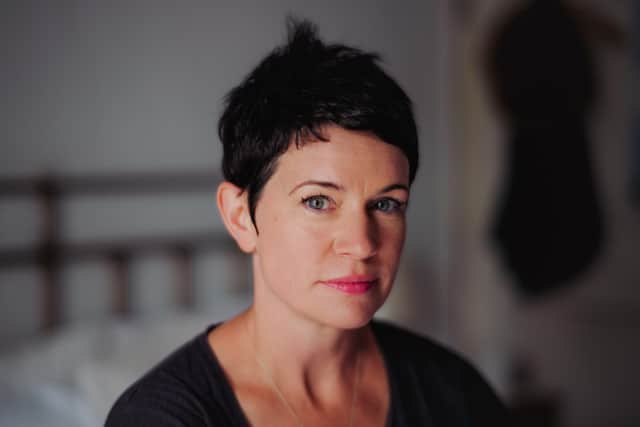
One surprise was Ken Liu’s All That We See Or Seem, his first crime novel, dealing with cyber-crime, modern slavery and dream manipulation. I had very much enjoyed his short stories – somewhere between Borges and Ballard – and took the opportunity to read his epic, four volume fantasy, The Dandelion Dynasty, which I rate more highly than Game of Thrones. Indeed, it would make a superb TV series (although read the books: he goes into brilliant detail about the topics like the speculative biology of the fire-breathing garafins). Liu is also the translator of Liu Cixin’s The Three Body Problem: if the Edinburgh Book Festival wanted to reassert its international seriousness, they would be a canny choice.
Poetry in translation is a difficult sell at the best of times, but Colin Bramwell’s Scots version of Pessoa is a perpetual joy, and there is a limpid excellence to DM Black’s finale of Dante’s Divine Comedy. It was thanks to a Scots translator that we had Solvej Balle’s On the Calculation of Volume. I was exceptionally disappointed it didn’t win the International Booker (cf. opening sentence, again), and the third volume moves the narrative of a woman looped in time forward in unexpected ways. The outlines of a future horror are already coalescing.
Mark Z Danielewski’s House of Leaves has an almost totemic significance for me; a novel of staggering intelligence with the capacity to give you nausea and gooseflesh, and unforgettably designed. His new book, Tom’s Crossing, may be 1,230 pages long but I read it in a weekend. A Western, a ghost story, an odyssey, a kind of Iliad, a meditation on how and what we commemorate, a study of the way trauma becomes art and music and fable, it grips like a vice from the outset, and although its puzzles and cryptographs are more subtle that in House of Leaves, they are still there. And you need a copy of the Book of Mormon.
The other book I pored over is Victoria Whitworth’s The Book of Kells. Its thesis – that the most famous early illustrated manuscript is actually the work of a people, the Picts, thought not to have a book culture – is compelling: I did a radio programme where it was speculated that standing stones have “folio page”-like dimensions, so it is a joy to see a hunch fleshed out so precisely and convincingly.

A hearty thanks to Penguin, too, for their always reliable Hallowe’en books. Rosalind Ashe’s Moths and Hilda Lewis’s The Witch and the Priest will last beyond November. One final tip of the hat: Jesus Christ Kinski by Benjamin Myers is a wee stunner. Remember the days when art was actually controversial?
The Scotsman’s arts newsletter is now sent twice a week - subscribe today
Want the latest Scottish headlines sent directly to your phone? Sign up to our new WhatsApp channel here.
Comments
Want to join the conversation? Please or to comment on this article.