
I'm a tour operator and these are the secret treasures of Scotland


Drawing on his experience running his Distinct Scotland tour company, Bryan Millar Walker has now written Unseen Scotland, which celebrates the gems to be found just off the beaten track.
Stretching across the northern and western regions of Scotland, the Scottish Highlands encompass some of the most rugged and untamed, as well as remote and sparsely populated, land in the country, meaning that many of its splendours are unseen by most.
The history of the Scottish Highlands is as ancient as it is storied, with evidence of human habitation dating back thousands of years. The people of the Scottish Highlands are known for their fierce independence, strong sense of identity and deep connection to the land. Traditional Highland culture, including Scots Gaelic language, music and dance, continues to thrive in many communities.
Beyond its rich cultural heritage, the Scottish Highlands boast some of the most breathtaking scenery in the world. From the majestic peaks of Ben Nevis and the Cairngorms to the rugged coastlines of the Isle of Skye and the Northwest Highlands, the region offers endless opportunities for outdoor exploration. Here are some of my personal highlights.

GLEN AFFRIC Best Nearby Town: Drumnadrochit
Over thousands of years, Scotland has lost more than 95 per cent of its forests due to natural and unnatural changes in the climate and a lot of human intervention. The best example of how this piece of land used to look sits quietly between the Isle of Skye and the banks of Loch Ness.
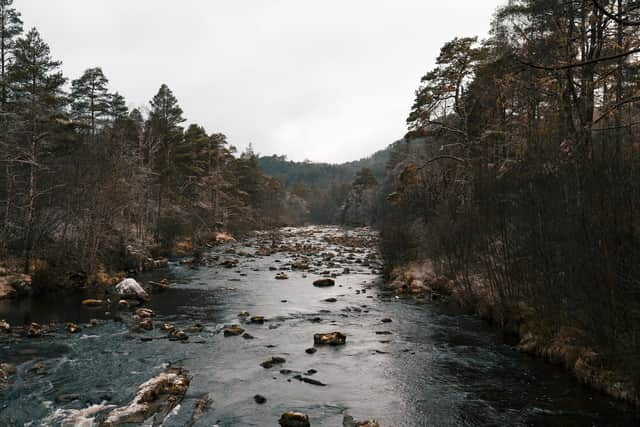
Glen Affric hosts over 48km (30 miles) of ancient Caledonian pinewoods, oak trees and a rich variety of flora that creates a sanctuary for wildlife, including red deer, golden eagles and the elusive Scottish wildcat. Delicately looked after by the Forestry Commission, the area is not often promoted as a place to travel, but there are enough facilities, roads and parking to host those willing to make the journey to experience nature truly at its best.
Littered with small farms and homes, the winding roads take you past fast-flowing rivers and deep into forests filled with trees covered head- to-root in lichen. To reach the main vantage point, walk up a steep hill from the car park for around a 1km (0.6 mile); then the trees will part and the mountains either side will lead your eye to the gorgeous loch sitting silently below, framed by the very trees that surround you.
In the forest is said to lurk a mysterious figure of Scottish folklore known as the Ghillie Dhu. Wrapped in a cloak of moss and leaves, with eyes like pools of darkness, the Ghillie Dhu is a guardian spirit of the wilderness, feared and revered by those who dwell near its domain.
According to legend, the Ghillie Dhu is a solitary creature, seldom seen by mortals except under the cover of twilight or amidst the whispering branches of the forest. It is said to possess the ability to blend seamlessly with its surroundings, becoming one with the dense foliage and hidden glens that it calls home.
But, despite its elusive nature, the Ghillie Dhu is not a malevolent being. On the contrary, it is said to harbour a deep love for the natural world and all its inhabitants. In times of need, the Ghillie Dhu may emerge from the shadows to offer aid and protection to lost travellers.
Yet woe betide those who show disrespect for the forest or seek to exploit its riches for their own gain, for the Ghillie Dhu is also a vengeful spirit. It is said to cast curses upon those who desecrate its sacred groves or disturb the delicate balance of nature. The story serves as a reminder of the untamed beauty and hidden dangers of the wild and even today, tales of encounters with this enigmatic forest spirit continue to echo through the mist-shrouded glens.
CORRIESHALLOCH GORGE Best Nearby Town: Ullapool
Resting in an area that is never short of breathtaking views, and just a short walk from a new little car park, the well-maintained path takes you down through a forest of silver birch before revealing an incredible gorge carved out by the small stream of fast-flowing water below.
The gorge was formed during the Ice Age by glacial meltwaters and erosion, resulting in a deep, narrow chasm that stretches for around 1.5km (0.9 miles). The force of the water carved the gorge through the hard rock, leaving behind sheer cliffs that plunge around 60m (200ft) to the river below.
Every season brings a new experience to this tiny part of the world. At this time of year, autumn illuminates the path with colours of gold and yellow as the mushrooms push their way to the surface. Winter blankets the area in snow and freezes over the smaller falls running through the gorge, creating countless icicles that hang from the rocks and moss.
A wobbly (yet extremely secure) suspension bridge allows visitors a fantastic top-down view to the drop below. The bridge, originally built in 1874 but refurbished in 1977, is a testament to Victorian engineering and immediately turned the gorge into a popular attraction.
HERMIT’S CASTLE Best Nearby Town: Achmelvich
Built in the 1950s by architect David Scott, Hermit’s Castle was intended as a retreat – a place for seclusion and contemplation amid the serene Highland landscape. Its design, resembling a minimalist fortress, blends seamlessly with the natural surroundings, featuring stark lines and a compact layout that mirrors the rugged terrain. The castle itself is so small that you need to look carefully to even spot it among the rocks.
Despite its name, Hermit’s Castle was never actually inhabited by a hermit. Instead, it was crafted as a holiday home. Over the years, the castle has become a hidden gem for adventurers, hikers and those seeking a glimpse into Scotland’s lesser-known architectural wonders.
On a clear day you’ll be able to see incredible views from Assynt behind you, the Outer Hebrides to your east, and to your south, the jagged mountains and extinct volcano of the Isle of Skye itself.
Sunset can make a perfect time to visit with the right conditions, especially in the colder months when the still, crisp air settles the clouds and the angle of the sun allows the colder crystals in the air to alight with colours of blue and purple.
Unseen Scotland by Bryan Millar Walker is published by Greenfinch, priced £30, out now.