
Clearing the Air by Hannah Ritchie review: 'clear-eyed' on climate change
Hanna Ritchie’s new book shows how to deal with climate change via the disciplined application of facts, writes Roger Cox
This is a book built out of short, simple sentences. And these short, simple sentences have a power. Reassuringly, they make it feel as if there is a clear, logical pathway to dealing with the climate crisis. If only we could block out all the noise and concentrate on the numbers.
Numbers, you see, are Hannah Ritchie's thing. She's a data scientist. Not just any data scientist, but a black belt in data. Her official title is Senior Researcher in the Programme for Global Development at the University of Oxford. Originally from Falkirk, she was also named Scotland's Youth Climate Champion in 2022. Her approach to dealing with the climate conundrum? The steely, disciplined application of facts. People who know numbers know she's good at numbers. In 2024, the Royal Statistical Society awarded her an Honorary Fellowship. Incredibly, she's still only 32.
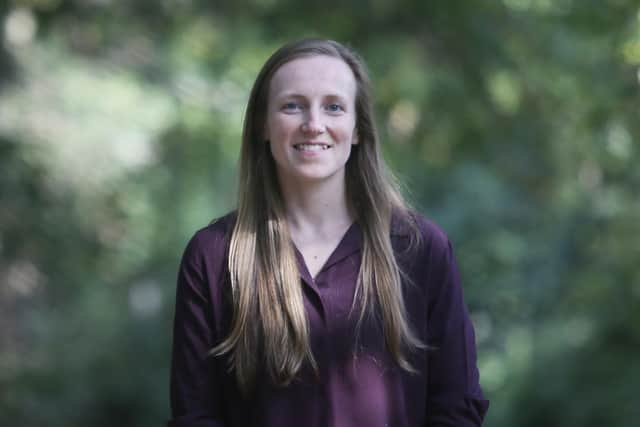

The subtitle of her new book is "A Hopeful Guide to Solving Climate Change - in 50 Questions and Answers." And yes, after reading it you will indeed feel hopeful. Unless you are a politician currently trying to wring votes out of rubbishing the green agenda. These people should be terrified of this book. Why? Because it blows up their insubstantial towers of whataboutery with the dynamite of data. Again, and again, and again.
Don't we emit a lot of CO2 manufacturing all those solar panels and wind turbines? Yes, says Ritchie, but even if you factor that in they still have a far smaller carbon footprint than fossil fuels per kilowatt-hour. Look, here's a graph to show the enormity of the difference.
Don't electric cars take more carbon to produce than petrol ones? Yes, but over their total lifespan they are responsible for significantly less CO2 emissions. Plus, they are getting more carbon-efficient all the time. See, here's another graph.
Isn't nuclear power dangerous? Nope, statistically-speaking it's one of the safest forms of energy available to us. Per unit of energy produced, it causes 99 per cent less deaths than coal and 98 per cent less deaths than gas.
Aren't meat substitutes worse for the climate than meat because they take so much energy to produce? No, wrong again. Here's another graph.
And on she goes, with relentless, clear-eyed efficiency. One staccato sentence at a time.
Refreshingly, when it comes to questions where there's insufficient data to give a definitive answer, Ritchie is happy to say as much. Is solar engineering (cooling the planet by reducing the amount of sunlight that reaches it) too risky? "We need to research it to know how risky," she writes. But it’s not going to be a "silver bullet". Carbon emissions will still need to come down.
Ritchie concludes with a plea. "Data is necessary for effective change, but it's not sufficient on its own," she writes. "The real magic comes when smart people combine data with a compelling narrative." So, storytellers: over to you.
Clearing the Air, by Hannah Ritchie, Vintage, £20
The Scotsman’s arts newsletter is now sent twice a week - subscribe today
Comments
Want to join the conversation? Please or to comment on this article.