
Cat Wumman, by Gerda Stevenson review: 'beautifully crafted'
This powerful collection of short stories marks its author out as one of the great contemporary champions of the Scots tongue, writes Joyce McMillan

Gerda Stevenson lives in Midlothian, that land caught between the cities of Scotland’s central belt, and the wild high uplands of the Borders. It therefore makes sense that all her recent writing - including the 2021 story collection Letting Go, and the 2023 poetry cycle, Tomorrow’s Feast - seems perfectly poised between the deep and intimate sense of place and nature that comes with a rural life, and a comprehensive understanding of our brilliant and fragile 21st century world, with its collapsing climate patterns, and its frightening dependence on technologies most of us can barely begin to understand.
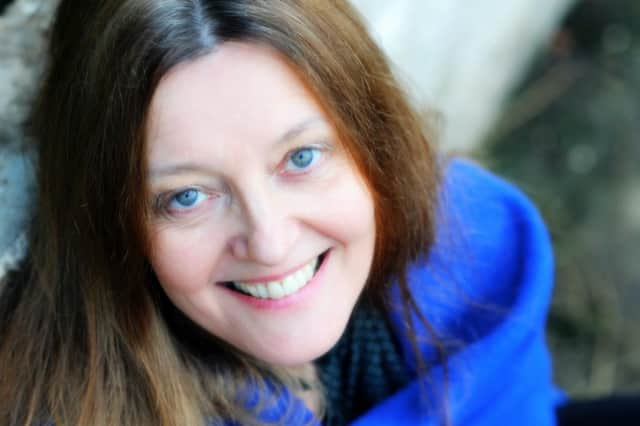

Stevenson’s new short story collection, Cat Wumman: Tales O Nine Lives - is no exception; a powerful sequence of nine stories, in just over a hundred pages, mainly inspired by Scottish and Irish folk tales, Border ballads, and the writings of south of Scotland poets James Hogg and Hugh MacDiarmid; but also drawing on the folk traditions of Japan, North America and the Arctic, while remaining firmly rooted in the experience of Stevenson’s generation of contemporary Scotswomen, born in the 1950s and 60s.
There are tales of wives and mothers silenced by grief, or bereft by the long responsibility of caring for a failing husband; of an old lady damned as a witch by daft bullying schoolchildren in 1950s Scotland; of another visited by a strange other-worldly granddaughter, in a 21st century reworking of James Hogg’s chilling poem Kilmeny; and of an elderly woman confined to a care home, who - in a vision from a Japanese folk legend - is led by wild rolling dumplings into another world entirely.
That theme of escape from our crumbling world into different and perhaps wiser realities is a recurring theme of the collection, sweeping male wedding guests into different worlds in both the cross-gender opening story, The Tither Side, and The Wedding Guest, which - like one of the poems in Tomorrow’s Feast - reimagines the story of Coleridge’s Ancient Mariner for the age of Europe’s refugee crisis. And the book is also haunted by the glimpses of another world experienced during the Covid pandemic; the title story Cat Wumman - based on a Mississippi tale - tells of a modern working-class woman with an old spinning wheel, who, in the depths of lockdown, finally uses its magical power to escape from the domestic prison created by her fiercely controlling husband.
What distinguishes this book from Stevenson’s earlier work, though, is her decision to write this story-cycle entirely in a strong, lyrical and consistent vernacular Scots, of the kind widely spoken across the Lothians until 50 years ago, and still strongly present in some communities there.
READ MORE: The North Sea: Along the Edge of Britain by Alistair Moffat review: 'wonderfully descriptive'
At first glance, it seems a strange choice; the different worlds represented here - from the Inuit climate change legend reworked in Birdie Boy, through the Highland wedding party of The Tither Side, to the urban social realism of the grief story Jazz In Helmand - seem to suggest different registers of language, in all of which Stevenson writes with fluency and power.
Yet in conjuring up the dimension that binds these stories together - the sense of a civilisation in crisis, of a world threatened with fire, flood and plague, and of women dreaming of old ways and wisdoms that might point a way to the future - Stevenson seems to have reached for the Scots she heard in her youth and childhood; and found that despite its visible age, she can rework it into a garment whose basic structure - with its strong, well-grounded music, its closeness to the natural world, and its limited tolerance for the nonsensical and pretentious - seems to fit the time better than any more recent idiom.
In Stevenson’s hands, in other words, her beautifully crafted and wonderfully speakable Scots seems like a language reborn to meet the deep civilisational challenge of our time; through a book of mighty and magical stories simply and superbly told, that marks its author out as one of the great champions of the Scots tongue, in the year when it finally took its place as one of Scotland’s official languages.
Cat Wumman: Tales O Nine Lives, by Gerda Stevenson, Luath, £8.99
The Scotsman’s arts newsletter is now sent twice a week - subscribe today
Want the latest Scottish headlines sent directly to your phone? Sign up to our new WhatsApp channel here.
Comments
Want to join the conversation? Please or to comment on this article.