
Art reviews: Jillian Edelstein | Photo Dalkeith | Coast


The Jillian Edelstein retrospective at Stills captures the compassion and humanity of her work and leaves you wanting more, writes Susan Mansfield
Jillian Edelstein: Among People, Stills Gallery, Edinburgh ★★★★★
Photo Dalkeith, Dalkeith Palace ★★★
Coast, Fidra Fine Art, Gullane ★★★★
It’s been a great summer for photography in Edinburgh and it’s not over yet. Just round the corner from the wonderful Sandra George exhibition at City Art Centre is the first survey show in Scotland of the work of South Africa-born, London-based photographer Jillian Edelstein, curated by Tracy Marshall-Grant.
Edelstein began her career as a photojournalist in Johannesburgh in the 1980s, and from the get-go, it’s clear her interest is less in politics than in people, from the ladies of Pinelands Bowling Club to the fishermen of Kalk Bay.

In portraiture, her work is thoughtful and powerful, making use of light and shade to create mood rather than drama. Here, she turns her careful gaze on Nelson Mandela, Primo Levi, Vanessa Redgrave, James Baldwin. John Hadju, from her series Generations: Portraits of Holocaust Survivors, is shot mainly in shadow; the light falls on a small teddy bear, a tiny, fragile emblem of the past.
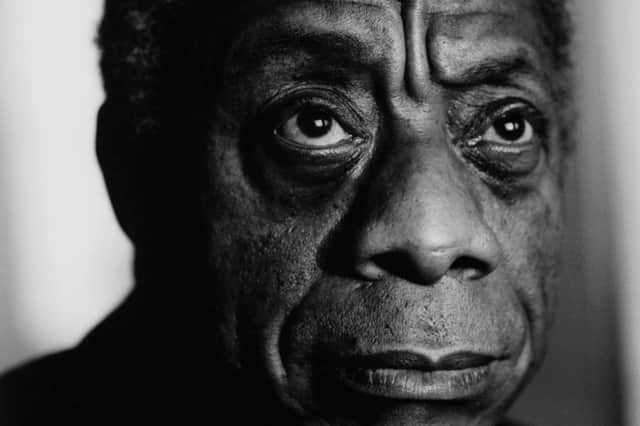
In London in the early 1990s, she began a series called Affinities, photographing pairs of people whose partnerships are personal or professional or both. It’s a study of connections: Gilbert & George sit on matching chairs, Fiona Shaw and Deborah Warner walk across a wintry park. Whether part of this series or not (it isn’t clear), Picture Post photographer Bert Hardy shares a joke with a former women’s editor, Anne Scott-James, his face all mischief; you can almost hear their laughter.
The covid-19 lockdowns sparked a new series, Water Rats, documenting the cold-water swimmers using the ponds on Hampstead Heath, of whom Edelstein herself is one. It’s also about connection: a disparate community united by their desire to swim.
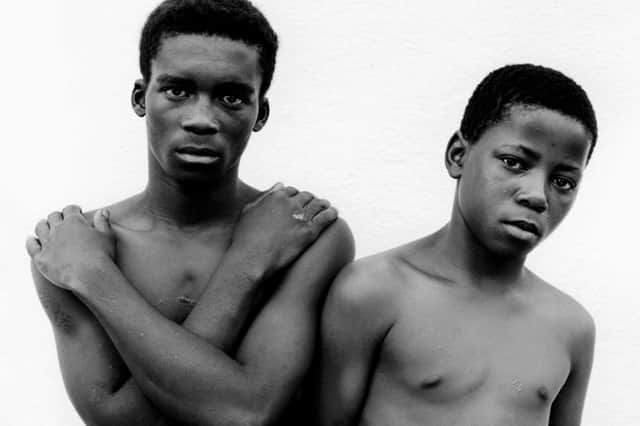
Perhaps the most moving body of work here is Truth and Lies, from years spent documenting South Africa’s Truth and Reconciliation Commission. Her portraits capture many of those who told their stories: widows, mothers of murdered sons, young men still scarred from their injuries, a former ANC chaplain who lost his hands in a letter bomb. They are dignified and compelling. Her portrait of Bishop Desmond Tutu, head resting on his hands, seems to sum up the weight of sorrow which is held by this formal exercise in empathy and compassion.
While there is only room to share a few examples from each series, this showcase captures the spirit of Edelstein’s work, its compassion and humanity. Each section leaves you wanting more.

Now in its third year, PhotoDalkeith is this year part of RSA200: Celebrating Together, and is the principal photography showcase in RSA’s anniversary programme. While there are lots of interesting individual works here, it’s an uneven and at times frustrating smorgasbord which shuttles between historic and contemporary photography.
We enter via a room of pictures from the Buccleuch family album, focusing on the 6th Earl and Countess and their eight children, the last family to use the palace as a family home in the years before the First World War. They were thoughtfully selected by Walter Dalkeith, the current Earl, who is a fine art photographer, and the final room of the show features Time Marches On, his striking black and white images from Huangshan, China.
In between, the show is made up of work largely (perhaps exclusively) from the RSA collections, claiming to trace the evolution of photography through 200 years. But there is no through-line. It’s rich in the early years: David Octavius Hill was a founding RSA member, though as a painter rather than in the role for which he is now best known, one half of pioneering photographic duo Hill and Adamson. Then there’s little until lens-based artists began to be admitted as RSA members in the last few decades.
READ MORE: Edinburgh Art Festival reviews: Del LaGrace Volcano | Emii Alrai | Richard Maguire | Sgàire Wood
A large room brings together a cross-section of RSAs who use photography in their practices, from Calum Colvin and Wendy McMurdo to Dalziel + Scullion, Leena Nammari and Philip Braham, whose photography in series such as Different Histories of Light make a fascinating parallel to his painting practice.
There’s a different cross-section in the next room, devoted to the past winners of the RSA’s Morton Award for Lens-based Media from 2006-2023: work from Thomas Joshua Cooper’s Scattered Waters series, Alicia Bruce’s Sims, looking at the robotic patients used in medical training, Sekai Machache’s beautiful The Divine Sky, Paul Duke’s No Ruined Stone and Daniel Cook’s Love Letters from Aberdeenshire.
I would have been happy to see more work by any of the above artists, but we are hurried on to a mixed-quality room of pictures by new graduates on the John Kinross Scholarship, then a room of portraits of Academicians, half James Good Tunny from the mid 19th century, half William Gillies by Joseph McKenzie in 1969.
The next half-dozen rooms shuttle between past and present: photographs of the Royal Armoury in Spain from the 1850s by Charles Clifford and his wife Jane; a room of early photographs of Edinburgh, and another devoted to Hill and Adamson, which includes beautiful photogravures of two of their pictures by James Craig Annan.
There’s a room by Caroline Douglas, the inaugural recipient of the RSA Elizabeth Nornie Photography Award (which replaces the Norton Award), looking at women in early photography. Her ghostly “Lilac positives” reveal evocative, half-suggested portraits, but the richness and depth of her research needs more explanation.
Then there’s a single moving-image work, Disproportionate Impacts & Everyday Agitations by Zoe Irvine and Pernille Spence, which explores the wider metaphor of precarity, with a full tea service teetering its way to inevitable destruction while chairs drop to the ground and smash. It’s compelling to watch but would sit better in a show dedicated to contemporary work.

Meanwhile, Coast at Fidra Fine Art in Gullane presents a rare treasure: a small group of paintings by Jon Schueler, the American artist associated with the Abstract Expressionists who painted some of his finest work near Mallaig on the Sound of Sleat. The work has come from the Jon Schueler Foundation in New York, which is managed by the artist’s Scottish wife, Magda Salvesen.
These are exceptional, and it is a huge pleasure to see them in the flesh. Paintings which might at first appear semi-abstract, almost minimal, reveal themselves, the longer one looks, as detailed studies of land, sea and sky (especially sky). Rather as Monet did before him, Schueler painted the same view from his studio at Romasaig through different moods, weather and light.
In Red Sleat Blues (1977), pastel shades of blue and pink open up into a translucent white-gold which the light seems to pour through. Even what looks like uniform grey at first gradually reveals subtle shifts of lightness and tone. Not really abstract at all, they are attempts to get to grips with this landscape which can seem to float between water and sky.
The Schuelers inevitably become the centrepiece of Coast, orbited by other artists just as fascinated by the edges of the land but whose work is very different. Marian Leven’s paintings come from long contemplation of coasts, both East and West, distilled in her studio into calm, delicate, monochromatic studies of clouds, weather and water. The delicacy of her mark-making is echoed in the ceramics of Jennifer Alford, which are threaded through the show.
Using a complementary palette of whites and greys, Will Maclean’s collages and reliefs draw on the history and mythology of the sea: several works here collage pages from the log book of the Dinaric, a British merchant ship sunk by a German torpedo in 1942. Found materials are combined to make fictional or mythic objects like the “herringcaller” a shaman might have once used to call the shoals. Dominique Cameron’s colours are brighter, painting salt marshes from above. Her major work, Gansey, is a colourful geometric abstract, inspired by the patterns of fishermen’s jerseys.
Jillian Edelstein: Among People runs until 24 October; PhotoDalkeith until 27 September (open Fri-Sun), tickets £3; Coast until 11 October
The Scotsman’s arts newsletter is now sent twice a week - subscribe today
Enjoying the Arts & Culture journalism on scotsman.com? Make it easier to find by selecting us as a preferred Google source
Want the latest Scottish headlines sent directly to your phone? Sign up to our new WhatsApp channel here
Comments
Want to join the conversation? Please or to comment on this article.