
Kenmure Street: 'No one is illegal. We all belong' - Dani Garavelli
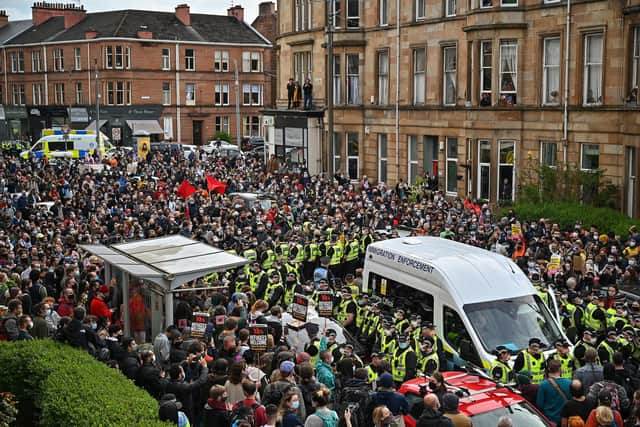
At around 5pm on 13 May, 2021, Beverly McFarlane was standing on Kenmure Street in East Pollokshields as the doors of a Home Office van opened, and two Indian Sikh men, who had been held inside, stepped out to mass applause.


The retired nurse, who moved to the Glasgow suburb from London eight years ago, had been there since the morning. She had watched the numbers swell from a handful of locals to a large, but peaceable crowd. She had joined in the chants: “These are our neighbours, let them go.”
“What impressed me was it was largely made up of people with prams and people walking their dogs,” she says now. “There was a real sense of unity. Then - at last - we saw the men being released. It was so exciting to feel we had achieved our goal.”
Tabassum Niamat, who has lived in East Pollokshields all her life, was also there. “There were a lot of people of all demographics,“ she says. “It was magical. I use that word because nothing was really said; it was spontaneous and organic and we had become one.”
The Kenmure Street protest, which followed a dawn raid on the Muslim festival of Eid, made the national news.
The activist who lay under the vehicle for eight hours - preventing it from being driven away - was immortalised in song. Photographs of the two men, Lakhvir Singh and Sumit Sehdev, walking either side of human rights lawyer Aamer Anwar, fired the public imagination.
The fightback was voted one of the Top 10 “demonstrations that made a difference” in 2021.
McFarlane is a veteran of protests. She was at the anti-Iraq War demonstration in London in 2003 and the Make Poverty History march in Edinburgh during the G8 two years later.
“I got a bigger sense of empowerment from the Kenmure Street protest than from walking alongside thousands of others against the Iraq War, because, frankly, in 2003 we might as well not have
bothered," she says.
“I felt this was a community that was prepared to stick together and to nail its colours to the mast. It left me with a sense that ordinary grassroots people can change things.”
While the protest prevented the detention of the two men, who had lived in Scotland for 10 years - it did not prevent other detentions and deportations. And the Home Office’s stance has

only hardened since.
Seven months later, McFarlane was watching Home Secretary Priti Patel’s attacks on migrants with growing consternation. She was outraged when she realised the Nationality and Borders
Bill would criminalise the rescue of asylum seekers by the RNLI and others if they were deemed to be “facilitating” their arrival in the UK (the government later backed down on this
under the weight of the backlash). And she was distressed by the news of the mass drowning of migrants in the Channel.