
Mark O'Connor: 'You can't strip the politics out of American music'


Excelling at everything from bluegrass to classical, composer and virtuoso Mark O’Connor defies pigeonholing. Jim Gilchrist finds out why
When does a fiddle become a violin – or vice versa? It’s an irrelevance, really, for Mark O’Connor, whose astonishing career trajectory so far has soared from recording his first fiddle album at the age of 12 to composing bluegrass concerti and the magisterial sweep of his Americana Symphony.
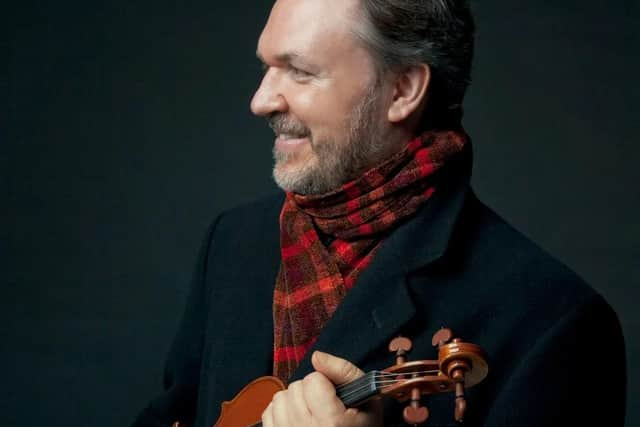
A three-times Grammy Award-winner, at 64, O’Connor is a genre-defying violinist straddling bluegrass, jazz, country and classical who has played with everyone from Yo-Yo Ma to Dolly Parton, Stéphane Grappelli to Aly Bain. His seemingly bionic fingers are equally impressive on mandolin and guitar, as Edinburgh International Festival audiences will discover when he appears with his wife and playing partner Maggie, a conservatoire-schooled violinist, during the Festival’s intimate concert series at The Hub.
Of that fiddle-violin question, he points to his limpid Appalachia Waltz, which he composed for his inspired bluegrass-classical collaboration with cellist Yo-Yo Ma and double-bassist Edgar Meyer, and which became a theme for his symphony. “The question if it’s a fiddle or a violin is completely lost when it comes to performing something like Appalachia Waltz,” he says. “I felt the idea could be aided much more successfully by creating music for it, rather than borrowing from one side and squishing it into the other. My idea was to use new string compositions to carry this uniting of the violin and fiddle forward to where it becomes both – or neither.”
O’Connor is clearly not one for pigeonholing. You’re as likely to hear his violin skittering and cascading through a bluegrass medley as sparkling in one of his Caprices or delivering a scorching account of Tiger Rag with his friend, celebrated trumpeter (and husband of festival director Nicola Benedetti) Wynton Marsalis. Then there’s his other “classical” creations, including fiddle concerti and the Americana Symphony he describes as “a journey through the soul of America”.
Enjoying The Scotsman's coverage of the Edinburgh festivals? For just £2 a month you can get unlimited access to scotsman.com plus 2-for-1 Fringe tickets. For details visit www.scotsman.com/subscriptions
He attracts plaudits from critics and musicians alike across genres – the late, legendary country fingerpicker Chet Atkins reckoned that “[O’Connor] and Itzhak Perlman are two of the greatest musicians on the planet today”. Marin Alsop, who conducted a recording of the Americana Symphony with the Baltimore Symphony Orchestra, cheered the piece succinctly as “a hit!”
O’Connor’s teacher when he recorded that first album in his early teens was Benny Thomasson (whose father and uncle composed the much-loved air Midnight on the Water), but by the age of 17 he had fallen under the spell of the legendary jazz violinist Stéphane Grappelli: “He became my final teacher and mentor. I accompanied him on guitar for national tours that included Carnegie Hall and we played twin violin numbers on stage.”
Still in his teens, he toured with jazz-bluegrass fusion outfits, before a period of session work in Nashville for the country stars. He was still in his early twenties when renowned Shetland fiddler and programme-maker Aly Bain introduced him to Scottish audiences with his BBC documentary Down Home, exploring the diverse American fiddle scene. He also joined Bain for an early Transatlantic Sessions programme and at the Shetland Folk Festival met up with Bain’s mentor Tom Anderson. “I found it all fascinating,” O’Connor recalls. “I consider American music a repository from all the world’s cultures.”
He refers to his widely popular Appalachia Waltz and its role in his symphony. “This very American-sounding music embodies the musical language and spirit of these original Scottish airs, I think. My music reflects this foundational source, as of course, all American fiddle music must.
“But,” he adds, “it is equally influenced by the African-American spirituals.”
This year’s festival theme is, of course “All Rise”, marking the 250th anniversary of America’s Declaration of Independence and also the title of Wynton Marsalis’s symphony which will open the festival. O’Connor describes Marsalis as “one of my best friends in music and in life, having played and recorded together over the course of 30 years – ever since we met at the closing ceremony of the Atlanta Olympic Games in ’96, when he was on the jazz float and I was on the country music float and we’d blow out musical phrases at each other as the floats passed.”
As well as trading riffs, O’Connor and Marsalis find themselves discussing politics amid the current unease and polarisation in Trump’s America. O’Connor was among those musicians who withdrew from the Trump-endorsed 250th celebrations in Washington DC and was critical of the President’s (now judicially foiled) attempts to re-name the Kennedy Centre for the Arts with his own.
“In response to some Americans asking me to leave politics out of my social media pages, I’ve had ten times that number telling me to keep using my platform for the cause of needed political change. And I do.”
O’Connor, however, regards the very act of playing or writing American music as political to some extent: “The four pillars of American music are the blues, the hoedown, the spirituals and ragtime. All four were born out of movements and were direct artistic responses to them. You don’t actually have any American music today, whether it be rock, country, jazz or rap, without direct ties to these four pillars. You don’t want to strip the politics completely out of American music because that’s what gives it its universal language and power to change hearts and minds.”
All rise indeed. And Edinburgh audiences should find the O’Connors’ music worth rising for. “Maggie is a conservatory trained violinist, but she also grew up playing blues and bluegrass in a family band. I had something similar in that my formative years were classical music lessons, then broadening my horizons to take in first flamenco then jazz and bluegrass, only to come full circle into what I term American classical composition. Our playing styles range from that American classical I became known for through my compositions for Yo-Yo Ma and my fiddle concertos, then we’ll land on some bluegrass, swing blues and old-time trad, with Americana vocals interspersed.”
Mark & Maggie O’Connor play The Hub, Edinburgh on 13 August. Mark also shares an “Up Late” Hub concert with Venezuelan conductor Gustavo Dudamel and friends on 16 August.
The Scotsman’s arts newsletter is now sent twice a week - subscribe today
Enjoying the Arts & Culture journalism on scotsman.com? Make it easier to find by selecting us as a preferred Google source
Want the latest Scottish headlines sent directly to your phone? Sign up to our new WhatsApp channel here
Comments
Want to join the conversation? Please or to comment on this article.